

COCORECO · CONNECTION & DEVELOPMENT

360° Feedback

Connect perspectives and turn insight into development.

Explore the options↗
+

It’s all about connection.

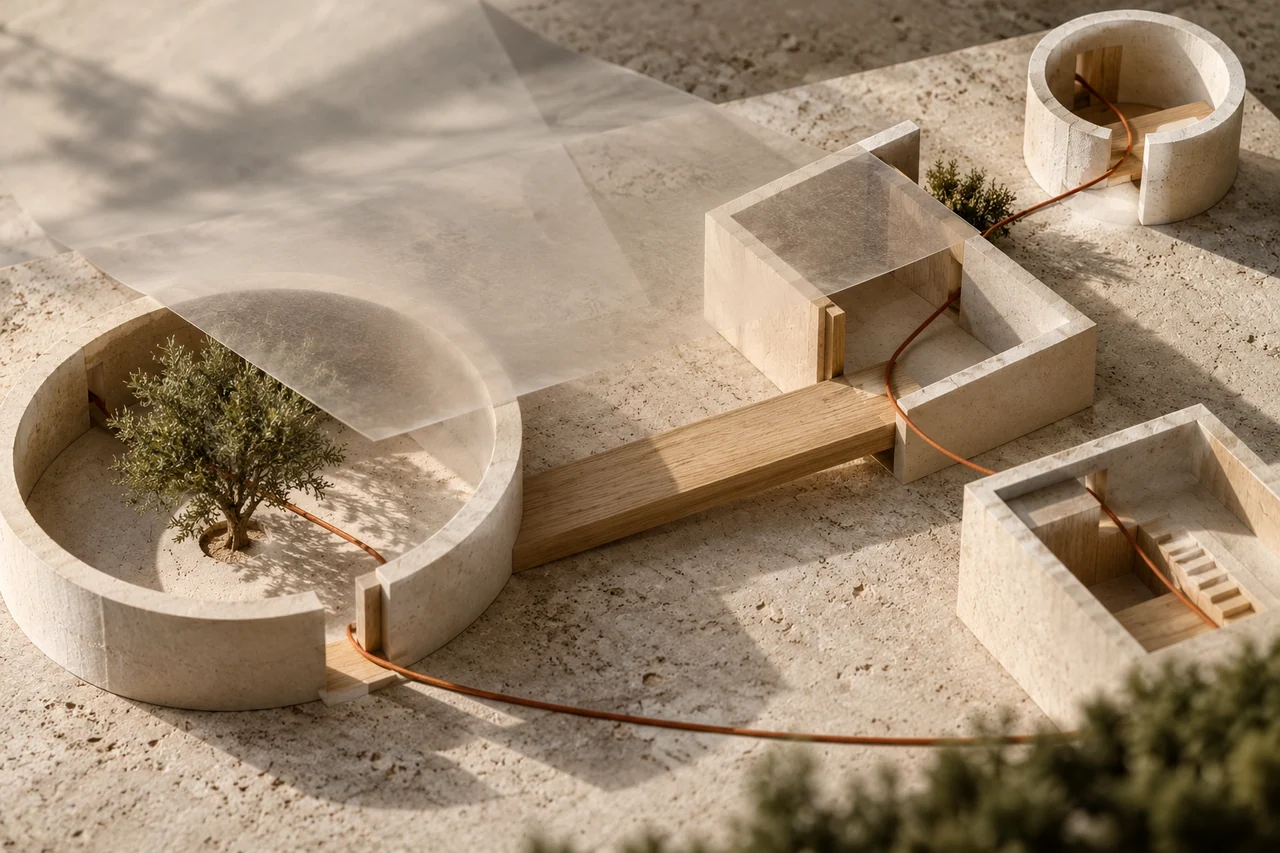
Different glass panels offer several perspectives on one oak form.
CoCoReCo Human connection. Lasting change.

COCORECO · 360°

360° Feedback

Different perspectives for practical development. Collect focused feedback and turn insights into three concrete experiments.

Individual 360°

Individual 360°

Compare your self-perception with how colleagues and managers experience your contribution and collaboration. Receive a visual report and three concrete behaviour experiments.

Information & foundations

Compare your self-perception with how colleagues and managers experience your contribution and collaboration. Receive a visual report and three concrete behaviour experiments.

Rate what you have observed over the past four weeks. Choose “unable to assess” when you have insufficient insight.

60 questions in 6 dimensions
  • Commitments & reliability · 10 questions — Make the outcome, owner and deadline explicit in three working agreements and check that expectations are clear.
  • Collaboration & contribution · 10 questions — For three shared tasks, ask what the other person needs and agree how to support each other.
  • Communication & listening · 10 questions — In three conversations, ask an open question and summarise the answer before responding; check my summary.
  • Ownership & initiative · 10 questions — Choose one recurring obstacle, discuss what I can influence and test one small improvement for two weeks.
  • Workload & boundaries · 10 questions — At two busy moments, discuss what comes first and what can wait; state my boundary with a concrete alternative.
  • Feedback & development · 10 questions — After three collaborations, ask what helped and what could change; try one tip and share what I learned.

COM-B, teamwork and self-determination inform reliability, contribution, communication, initiative, boundaries and development. This concerns work contribution, not a leadership test.

Weighted mean on a 1–5 scale per theme; at least 7 of 10 questions rated. Self and feedback remain separate. Feedback requires 3 valid raters per theme; group breakdown only when every non-empty group and dimension has at least 5 valid raters. Gap = self − feedback.

Original CoCoReCo items inspired by the cited models, not reproductions or official administrations of their instruments. Items, translations, thresholds and composite scores are not psychometrically validated or normed. Use for development dialogue, not diagnosis or standalone selection decisions.

View this sample report

SAMPLE · FICTIONAL RESULTS

Individual 360°

Fictional case Alex: contribution at work. One self/reference reflection and fifteen feedback respondents: groups of 5, 5 and 5. This report shows a fictional follow-up compared with a baseline using the same model, with 15 raters in each. Groups are not individually matched.

The bar shows average feedback (1–5). The marker is the self-rating.

Commitments & reliability2.5 / 5 · SD 0.8
Collaboration & contribution3.4 / 5 · SD 0.8
Communication & listening4.2 / 5 · SD 0.6
Ownership & initiative2.4 / 5 · SD 0.8
Workload & boundaries3.4 / 5 · SD 0.7
Feedback & development4.3 / 5 · SD 0.7

3 concrete behavioral experiments

  1. Commitments & reliability

    Maak in drie werkafspraken resultaat, eigenaar en termijn expliciet en vraag de ander of de verwachting duidelijk is.

    Compare three concrete work situations before and after the agreement and discuss the effect after two weeks.
  2. Ownership & initiative

    Kies één terugkerend knelpunt in mijn werk, bespreek mijn invloed en test één kleine verbetering gedurende twee weken.

    Compare three concrete work situations before and after the agreement and discuss the effect after two weeks.
  3. Feedback & development

    Vraag na drie samenwerkingen wat hielp en wat anders kan; probeer één tip en koppel terug wat ik leerde.

    Compare three concrete work situations before and after the agreement and discuss the effect after two weeks.

Download the full sample with scoring, dimensions, actions and sources. Your report uses your session’s model; this example shows the standard model.

Open the full visual example ↗

Download this sample report (PDF) ↓


Team 360°

Team 360°

Combine the team’s own view with feedback from partner teams and managers. Discuss trust, working agreements, dialogue and workload.

Information & foundations

Combine the team’s own view with feedback from partner teams and managers. Discuss trust, working agreements, dialogue and workload.

Rate what you have observed over the past four weeks. Choose “unable to assess” when you have insufficient insight.

60 questions in 6 dimensions
  • Shared direction · 10 questions — Choose one shared priority for two weeks and define how progress will be visible.
  • Trust & safety · 10 questions — Ask in two meetings which doubt remains unspoken; listen first and thank people for contributing.
  • Roles & ownership · 10 questions — Choose one task that falls between people, agree ownership and handover and review after two weeks.
  • Feedback & tension · 10 questions — Have one conversation about specific behaviour, its impact and a request; then ask how the other person experienced it.
  • Workload & mutual support · 10 questions — In two short check-ins, ask each person where help is needed and what they can offer; arrange one concrete exchange.
  • Collaboration & learning · 10 questions — Review one difficult handover with a partner team; test a new agreement and review after two weeks.

Teamwork, psychological safety and JD-R connect direction, roles, trust, feedback, workload and learning. Partners rate what they can observe.

Weighted mean on a 1–5 scale per theme; at least 7 of 10 questions rated. Self and feedback remain separate. Feedback requires 3 valid raters per theme; group breakdown only when every non-empty group and dimension has at least 5 valid raters. Gap = self − feedback.

Original CoCoReCo items inspired by the cited models, not reproductions or official administrations of their instruments. Items, translations, thresholds and composite scores are not psychometrically validated or normed. Use for development dialogue, not diagnosis or standalone selection decisions.

View this sample report

SAMPLE · FICTIONAL RESULTS

Team 360°

Fictional case Team Kern: agreements and trust. One self/reference reflection and fifteen feedback respondents: groups of 5, 5 and 5. This report shows a fictional follow-up compared with a baseline using the same model, with 15 raters in each. Groups are not individually matched.

The bar shows average feedback (1–5). The marker is the self-rating.

Shared direction4.2 / 5 · SD 0.6
Trust & safety2.4 / 5 · SD 0.8
Roles & ownership3.4 / 5 · SD 0.7
Feedback & tension4.3 / 5 · SD 0.7
Workload & mutual support2.5 / 5 · SD 0.8
Collaboration & learning3.4 / 5 · SD 0.8

3 concrete behavioral experiments

  1. Trust & safety

    Vraag in twee overleggen welke twijfel nog niet is uitgesproken; luister eerst en bedank mensen voor hun inbreng.

    Compare three concrete work situations before and after the agreement and discuss the effect after two weeks.
  2. Feedback & tension

    Voer één gesprek over concreet gedrag, het effect en een verzoek; vraag hoe de ander het gesprek ervoer.

    Compare three concrete work situations before and after the agreement and discuss the effect after two weeks.
  3. Workload & mutual support

    Laat in twee overlegmomenten ieder aangeven waar hulp nodig is en wat die kan bieden; maak één concrete uitwisseling.

    Compare three concrete work situations before and after the agreement and discuss the effect after two weeks.

Download the full sample with scoring, dimensions, actions and sources. Your report uses your session’s model; this example shows the standard model.

Open the full visual example ↗

Download this sample report (PDF) ↓
Organisation 360°

Organisation 360°

Explore how employees, management and partners experience the organisation: mission, culture, decisions, collaboration, sustainable work and change.

Information & foundations

Explore how employees, management and partners experience the organisation: mission, culture, decisions, collaboration, sustainable work and change.

Rate what you have observed over the past four weeks. Choose “unable to assess” when you have insufficient insight.

60 questions in 6 dimensions
  • Mission & direction · 10 questions — Discuss a current decision in two departments through the mission and note which priority becomes clearer.
  • Values & culture · 10 questions — Choose one value and agree two observable behaviours with a mixed group to practise for two weeks.
  • Decisions & trust · 10 questions — For three decisions, share the reasoning, decision owner and implications; ask affected people whether this is clear.
  • Collaboration across departments · 10 questions — Bring two departments together around one recurring bottleneck and test one shared agreement for two weeks.
  • Sustainable work & resources · 10 questions — Explore a recurring source of workload with a mixed group; make one adjustment and ask about the impact after two weeks.
  • Change & learning · 10 questions — Test one planned change with a small affected group; discuss concerns and lessons before expanding.

Motivation, JD-R, COM-B and psychological safety inform mission, culture, decisions, collaboration, resources and change from multiple positions.

Weighted mean on a 1–5 scale per theme; at least 7 of 10 questions rated. Self and feedback remain separate. Feedback requires 3 valid raters per theme; group breakdown only when every non-empty group and dimension has at least 5 valid raters. Gap = self − feedback.

Original CoCoReCo items inspired by the cited models, not reproductions or official administrations of their instruments. Items, translations, thresholds and composite scores are not psychometrically validated or normed. Use for development dialogue, not diagnosis or standalone selection decisions.

View this sample report

SAMPLE · FICTIONAL RESULTS

Organisation 360°

Fictional case Horizon organization: cross-department collaboration. One self/reference reflection and fifteen feedback respondents: groups of 5, 5 and 5. This report shows a fictional follow-up compared with a baseline using the same model, with 15 raters in each. Groups are not individually matched.

The bar shows average feedback (1–5). The marker is the self-rating.

Mission & direction2.5 / 5 · SD 0.8
Values & culture3.4 / 5 · SD 0.8
Decisions & trust4.2 / 5 · SD 0.6
Collaboration across departments2.4 / 5 · SD 0.8
Sustainable work & resources3.4 / 5 · SD 0.7
Change & learning4.3 / 5 · SD 0.7

3 concrete behavioral experiments

  1. Mission & direction

    Bespreek in twee afdelingen een actuele keuze vanuit de missie en noteer welke prioriteit duidelijker wordt.

    Compare three concrete work situations before and after the agreement and discuss the effect after two weeks.
  2. Collaboration across departments

    Breng twee afdelingen samen rond één terugkerend knelpunt en test één gezamenlijke werkafspraak gedurende twee weken.

    Compare three concrete work situations before and after the agreement and discuss the effect after two weeks.
  3. Change & learning

    Test één voorgenomen verandering met een kleine betrokken groep; bespreek zorgen en lessen voordat je uitbreidt.

    Compare three concrete work situations before and after the agreement and discuss the effect after two weeks.

Download the full sample with scoring, dimensions, actions and sources. Your report uses your session’s model; this example shows the standard model.

Open the full visual example ↗

Download this sample report (PDF) ↓

Project 360°

Project 360°

Review the project with its team, sponsor and partners. Explore direction, roles, coordination, risks and learning, then choose three improvement experiments.

Information & foundations

Review the project with its team, sponsor and partners. Explore direction, roles, coordination, risks and learning, then choose three improvement experiments.

Rate what you have observed over the past four weeks. Choose “unable to assess” when you have insufficient insight.

60 questions in 6 dimensions
  • Direction & success criteria · 10 questions — Agree three observable success criteria with the team and sponsor and use them to check one current decision.
  • Roles & decisions · 10 questions — Choose one recurring decision, agree the decision owner and consultees and test the agreement for two weeks.
  • Coordination & information · 10 questions — Close three project meetings with a decision, owner and date and check follow-up at the next meeting.
  • Planning & capacity · 10 questions — Map the key dependencies and jointly decide what to delay, reduce or stop.
  • Risks & speaking up · 10 questions — Reserve ten minutes in two meetings for an under-discussed risk and agree one action and owner.
  • Stakeholders & learning · 10 questions — Ask two stakeholders what the project delivers and what is missing; test one small adjustment and report back.

PMI domains and teamwork inform direction, roles, coordination, planning, risks and stakeholders. Psychological safety supports sharing difficulties.

Weighted mean on a 1–5 scale per theme; at least 7 of 10 questions rated. Self and feedback remain separate. Feedback requires 3 valid raters per theme; group breakdown only when every non-empty group and dimension has at least 5 valid raters. Gap = self − feedback.

Original CoCoReCo items inspired by the cited models, not reproductions or official administrations of their instruments. Items, translations, thresholds and composite scores are not psychometrically validated or normed. Use for development dialogue, not diagnosis or standalone selection decisions.

View this sample report

SAMPLE · FICTIONAL RESULTS

Project 360°

Fictional case Project Atlas: coordination and risk. One self/reference reflection and fifteen feedback respondents: groups of 5, 5 and 5. This report shows a fictional follow-up compared with a baseline using the same model, with 15 raters in each. Groups are not individually matched.

The bar shows average feedback (1–5). The marker is the self-rating.

Direction & success criteria3.4 / 5 · SD 0.7
Roles & decisions4.3 / 5 · SD 0.7
Coordination & information2.5 / 5 · SD 0.8
Planning & capacity3.4 / 5 · SD 0.8
Risks & speaking up4.2 / 5 · SD 0.6
Stakeholders & learning2.4 / 5 · SD 0.8

3 concrete behavioral experiments

  1. Roles & decisions

    Kies één terugkerende projectbeslissing, leg beslisser en betrokkenen vast en test de afspraak twee weken.

    Compare three concrete work situations before and after the agreement and discuss the effect after two weeks.
  2. Coordination & information

    Sluit drie projectoverleggen af met besluit, eigenaar en datum en controleer de opvolging in het volgende overleg.

    Compare three concrete work situations before and after the agreement and discuss the effect after two weeks.
  3. Stakeholders & learning

    Vraag twee betrokkenen wat het project oplevert en wat ontbreekt; test één kleine aanpassing en koppel terug.

    Compare three concrete work situations before and after the agreement and discuss the effect after two weeks.

Download the full sample with scoring, dimensions, actions and sources. Your report uses your session’s model; this example shows the standard model.

Open the full visual example ↗

Download this sample report (PDF) ↓
Customer 360°

Customer 360°

Invite customers to evaluate your products and services. 96 questions across twelve domains explore needs, quality, ease, communication, reliability, support, relationships, value, trust and improvement.

Information & foundations

Evaluate products and services from different customer perspectives. 96 questions across twelve domains show perceived value, differences in experience and priorities for improvement.

Evaluate one clearly named product, service or customer journey. Use the agreed review period or your most recent completed experience. Rate only what you experienced. Choose unable to assess when an item or whole domain does not apply; service-only customers may skip the product domain and vice versa. Allow about 20–30 minutes. An internal reference view is optional and shown separately.

96 questions in 12 dimensions
  • Needs & outcomes · 8 questions — Ask three customers about the desired outcome, their situation and one missing element. Adjust one promise and test it again.
  • Product quality & usability · 8 questions — With permission, observe three ordinary uses. Record errors, unclear instructions and rework. Improve one recurring obstacle and retest the same task.
  • Service delivery & expertise · 8 questions — For one service, define the minimum customer expectation, handover ownership and outcome checks. Test this across three assignments.
  • Accessibility & ease · 8 questions — Complete one full customer journey and ask a customer to do the same. Count unnecessary steps and repetition. Remove one step and check the effect.
  • Communication & clarity · 8 questions — Rewrite one customer message with the outcome, next step, owner and timing. Ask three customers to explain what they understand.
  • Commitments & delivery · 8 questions — Track commitments in one customer process for two weeks: date, owner, deviation and customer update. Improve one recurring cause of missed commitments.
  • Support & resolution · 8 questions — Review three problems from first contact to closure. Assign an owner, a response timeframe and explicitly ask whether the customer considers the problem resolved.
  • Care & customer relationship · 8 questions — Ask three customers to describe a moment when they did or did not feel heard. Practise one listening behaviour and check its effect at the next contact.
  • Price & perceived value · 8 questions — Compare one quote with the final outcome and invoice. Discuss value, gaps and unclear costs with the customer. Improve the explanation.
  • Transparency & trust · 8 questions — Choose three common promises or terms. Check what customers understand and compare with delivery. Clarify one gap without dressing it up.
  • Feedback & improvement · 8 questions — Choose a recurring customer need, test a small improvement and tell customers what changed. Check its effect on the same experience.
  • Overall experience & next steps · 8 questions — Compare the overall view with individual domains. Choose no more than two improvements with an owner and date. Reassess the same experience without assuming a link with revenue.

Original customer-experience domains informed by customer-journey research and customer-focused improvement. Not a SERVQUAL, NPS or ISO instrument or certification.

Scale 1–5, equal item weights. At least 6 of 8 answers and 5 usable customer responses per domain. Unable to assess is not zero. Mean, SD and n. Internal reference is optional and separate. No NPS or norms.

Original items and translations are not psychometrically validated or normed. Results describe responding customers, not representative market research, a product audit or causation.

View this sample report

SAMPLE · FICTIONAL RESULTS

Customer 360°

Fictional evaluation of a product and associated service at Example Company. Fifteen customers: five users, five buyers and five service customers. One optional internal reference is shown separately. The sample compares a fictional follow-up with a baseline using the same model and 15 customers per measurement. Groups are not individually paired.

The bar shows average feedback (1–5). The marker is the self-rating.

Needs & outcomes4.3 / 5 · SD 0.3
Product quality & usability4.3 / 5 · SD 0.3
Service delivery & expertise4.3 / 5 · SD 0.3
Accessibility & ease3.4 / 5 · SD 0.4
Communication & clarity3.4 / 5 · SD 0.4
Commitments & delivery4.3 / 5 · SD 0.3
Support & resolution2.4 / 5 · SD 0.4
Care & customer relationship4.3 / 5 · SD 0.3
Price & perceived value3.4 / 5 · SD 0.4
Transparency & trust4.3 / 5 · SD 0.3
Feedback & improvement3.4 / 5 · SD 0.4
Overall experience & next steps4.3 / 5 · SD 0.3

3 concrete behavioral experiments

  1. Accessibility & ease

    Doorloop zelf één volledige klantreis en laat een klant hetzelfde doen. Tel onnodige stappen en herhaling. Schrap één stap en vraag of dit werkelijk eenvoudiger is.

    Recheck the same experience with five customers and discuss concrete examples after two weeks.
  2. Communication & clarity

    Herschrijf één klantbericht met resultaat, volgende stap, eigenaar en termijn. Laat drie klanten in eigen woorden uitleggen wat zij begrijpen.

    Recheck the same experience with five customers and discuss concrete examples after two weeks.
  3. Support & resolution

    Neem drie recente problemen door van eerste melding tot afronding. Wijs één eigenaar toe, formuleer een terugkoppeltermijn en vraag de klant expliciet of het opgelost is.

    Recheck the same experience with five customers and discuss concrete examples after two weeks.

Download the full sample with scoring, dimensions, actions and sources. Your report uses your session’s model; this example shows the standard model.

Open the full visual example ↗

Download this sample report (PDF) ↓

Package

Self or reference reflection is included and does not count towards the maximum. Includes the online survey, visual report and three development actions. Separate from the equine coaching programmes.

Register for 360° Feedback

We use these details to follow up your registration. Only the authorised administrator has access. Do not include sensitive employee details. No marketing subscription.

COCORECO · HOW IT WORKS

Which development format fits your needs?

Explore our systemic approach and the full range of possibilities, with or without horses. With an English voice-over, captions and chapters. The voice is generated using speech synthesis.

Read the full explanation

Look deeper. Move forward. Why does a problem keep returning when everyone is trying their best? At CoCoReCo, we look beyond the visible question. Systemic work means understanding people within their relationships, roles, history and organisation. We explore what keeps a pattern going, rather than rushing to focus on one person or one solution. This is the distinctive character of our approach. What happens beneath the surface Alongside goals and processes are less visible dynamics: trust, unspoken expectations, loyalties, tension and belonging. We make this underlying layer discussable. Analysis, dialogue, exercises and reflection work together, before becoming concrete behaviours, clear agreements and follow-up. You work on the visible organisation and on the human conditions that help people move forward together. With or without horses We can also work with horses. Outside the usual meeting room, coordination, boundaries, initiative and tension become tangible experiences. You can slow down, notice bodily signals and try different behaviours. The experience supports reflection; the horse does not assess you. We connect careful observations with your working life. No horse experience is needed. We work from the ground, with attention to safety and animal welfare. Prefer a programme without horses? We will adapt it to your needs. Guidance for you Want to grow in your role, regain energy or work through change? Our individual guidance includes: Individual change programme. Individual vitality programme. Individual leadership programme. Sparring session for a manager. Programme for a new manager. From control to trust. Together we choose what fits your needs and working context. A team that grows together For team development, we offer: Team vitality programme. Team maturity programme. 21-day team challenge. Stronger together. Teamcrafting. Stress and burnout prevention. We clarify what you need and practise workable agreements. Make collaboration concrete For team development, we offer: Team charter workshop. Case workshop. Facilitated team dialogue. Change lab. Trust and speaking up. Workload and sustainable working. Feedback and assertive communication. We clarify what you need and practise workable agreements. Move the organisation forward For organisational questions, we offer: Organisational trauma programme. Human capital in transformations. Organisational constellations. Trauma in organisations. Organisations in transition. Untapped potential. We connect the question with people, roles and the wider system. Direction, culture and agreements For organisational questions, we offer: Developing an operational handbook. AI charter workshop. Collaboration across departments. Change and the undercurrent. Values and organisational culture. Mission and shared direction. We connect the question with people, roles and the wider system. Learn online, apply at work Our online training series are: Communication. Leadership for beginners. Coaching leadership. Coaching in the workplace. Boost your confidence. You connect learning with your own situations, exercises and practical application at work. Onsite training Our onsite training includes: Systemic Leadership. Unraveling unconscious dynamics in organisations. Well-being in organisations. The untapped potential in organisations. Dynamics in family businesses. Custom trainings. You connect learning with your own situations, exercises and practical application at work. Learn together in co-circles Want to reflect regularly with others? Explore our co-circles on: Family businesses: unique, but often more complex. Leadership: an in-depth exploration. Online peer consultation series for managers. Leadership Circle — online. Men’s circle. A facilitated space to share experience, broaden perspectives and explore new choices. Assessments: focused insight Looking for focused insight into a skill? Our assessments cover behaviour, coaching, leadership, personality, social skills, cognitive skills, sales skills and AI skills. An extensive visual report supports discussion of strengths, development questions and practical next steps. Use the selection guide or talk with us about the right starting point. Personality: understand yourself and others The extended personality test explores preferences, qualities and areas to watch in collaboration and leadership. The report includes charts, explanations and development suggestions. Teams can also take part and compare profiles, opening a conversation about complementary strengths, possible tensions and what helps you work well together. 360° Feedback: broaden your perspective With three-sixty feedback, you compare your own view with the perspectives of relevant others. There are individual, team, project and organisation versions. Customer three-sixty explores how customers experience your products or services. Discuss the different perspectives and choose practical development agreements. Feedback becomes a starting point for better conversations and focused practice. Challenge 21: from insight to habit Ready to put insight into action? Challenge 21 offers small tasks on working days, reflection and practical application. Take part individually, as a team or as an organisation. There are also programmes on Ikigai and thoughtful AI use. Short, regular practice helps you explore which habits work for you and those around you. Team scans: understand your collaboration What shared question matters to your team? Our team scans explore:Team maturity; Learning development; Team compass; Leadership in practice; Trust and speaking up; Cross-department collaboration; Change and underlying dynamics; Workload and sustainable working; Feedback and assertive communication; Values and organisational culture; Mission and shared direction; Human-centred work with AI; Customer orientation. Every survey has eight dimensions. The team report supports dialogue, a day of equine coaching and a follow-up survey. You agree on no more than three concrete working practices. Downloads: tools to use yourself Want to get started yourself? Downloads include conversation cards, exercises, checklists, e-books and videos. Fifteen extended practical packages include conversation kits, digital programme workbooks and ready-to-use team workshops. Theory, exercises, worksheets and infographics connect reflection with daily action. Request your chosen material through the form and we will follow up personally. Podcasts: space for a different perspective Development can also happen while you are on the move. Explore our podcast series: CoCoReCo Denkprikkel, food for thought; Onder de oppervlakte, beneath the surface; and Van luisteren naar doen, from listening to action. Short insights, deeper exploration and guided reflection offer fresh perspectives on leadership, collaboration and underlying dynamics. Your question. A fitting programme. Which development format fits your needs? You do not have to work that out alone. Cannot find what you need in our offering? Contact us for a tailored programme. We listen, clarify your question and build a suitable combination of insight, training and guidance, with or without horses. Contact Henk Van 't Net at CoCoReCo: henk at cocoreco dot be, or visit www dot cocoreco dot be. Full contact details are on screen and at the bottom of the page. From insight to movement, together with CoCoReCo.

COCORECO

Let’s get acquainted.

Contact ↗